| This article is part of an ongoing series documenting the criminal trials of former high-ranking members of the Thunder Bay Police Service. Here’s what we know so far: Background Ex-Thunder Bay police chief facing jail time for “HomeSense Investigation” Trial of TBPS lawyer Holly Walbourne • 4/13: Morriseau testifies against Walbourne • 4/14: Walbourne defense seeks clarity: “This is uncharted” • 4/14: Private notebook teased in first day of deputy chiefs testimony • 4/15: Deputy chief’s testimony builds timeline of events • 4/17: Court hears probe into Dimini message • 4/17: Crown rests, HomeSense memos enter court • 4/21: Crown, defence present submissions, decision coming Friday The trial of TBPS police chief Sylvie Hauth is scheduled for May 5 |
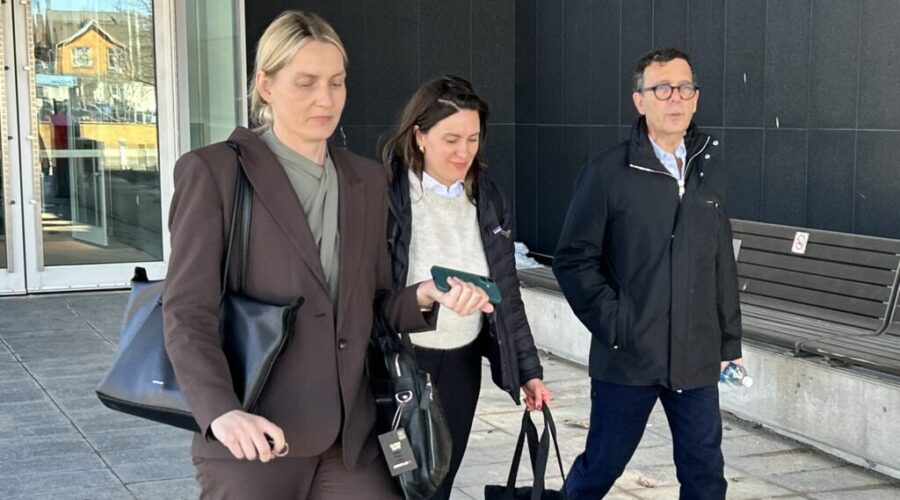
The trial of former Thunder Bay Police Service legal counsel Holly Walbourne resumed Tuesday after the final evidence was presented to court last week.
The Crown and Walbourne’s defence team presented their submissions ahead of a decision from Justice Robert Goldstein, which will be announced Friday.
Walbourne faces one count of breach of trust and two counts of obstruction of justice in connection with the “HomeSense Investigation” into former police board chair Georjann Morriseau.
Former police chief Sylvie Hauth is charged with the same offences stemming from the same case. Although the two were originally set to be tried together, medical issues delayed Hauth’s trial until May 5.
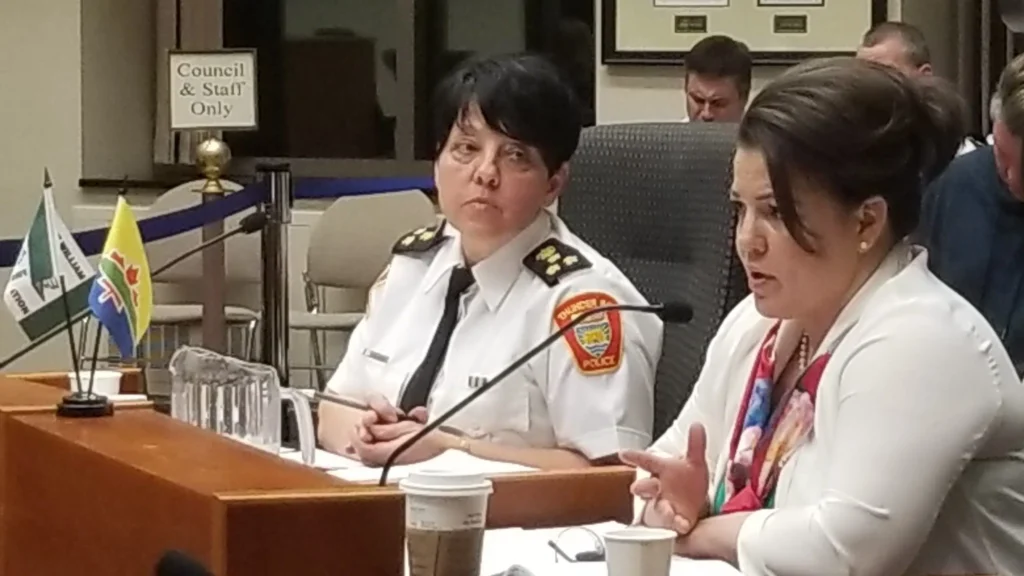
Former TBPS Chief Sylvie Hauth (left) and former TBPS board chair Georjann Morriseau (right) (file photo)
On April 14, the prosecution in the Holly Walbourne case made clear that they are looking to prove:
• Holly Walbourne was aware of a criminal investigation into Georjann Morriseau and a criminal code production order of her phone prior to December 9, 2020.
And,
• Holly Walbourne lied to the police board about her knowledge in Sylvie Hauth’s two memoranda to the board in October of 2021 (drafted in part by Walbourne).
And/or
• Holly Walbourne lied to an Ontario Civilian Police Commission officer about her knowledge during their two meetings regarding the case in March and May of 2022.
A working timeline of events during the HomeSense investigation, drawn from email records and witness testimony, is available here.
The crown’s submission
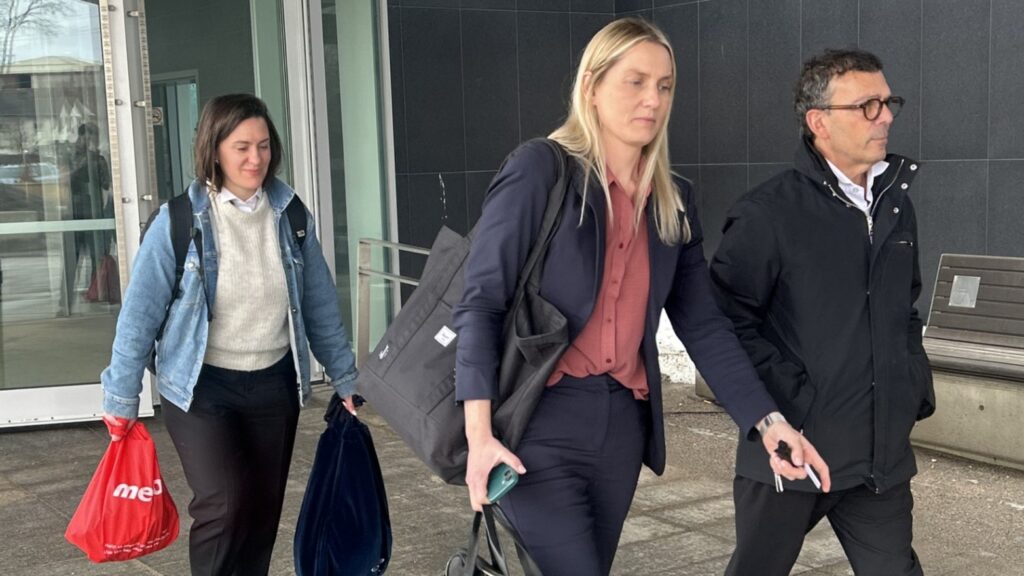
Crown lawyer Samuel Walker presented the prosecution’s submissions, with much of the Crown’s case relying on the testimony of Deputy Chief Ryan Hughes. Walker told the court there had been no “meaningful challenge” to Hughes’ credibility by the defence.
The Crown alleges it has proven beyond reasonable doubt that:
- The possibility of a criminal investigation into Morriseau was discussed during Walbourne’s November 10 phone call with Ryan Hughes, after Detective Rybak first told Hughes he knew his name had come up in the HomeSense investigation.
- The Crown alleges this put Walbourne “on notice” that the investigation could turn criminal later.
- Walbourne was briefed on the investigation in her November 30 phone call with Hughes, which came after the investigation started and a production order was requested for Morriseau’s phone.
- Hughes testified that, during the call, he told Walbourne about the production order (which can only be granted for a criminal investigation) and she did not tell him to stop the investigation. Walbourne later told the OCPC she was not informed about a production order during the call and that she advised Hughes to “lay off” until she could consult outside legal counsel. She also said she believed the matter fell under the Police Services Act and was not criminal in nature.
- Walbourne realized the Morriseau investigation was a liability after meeting with outside legal counsel on December 9, then sought to minimize her role in it and blame Deputy Chief Hughes when drafting the memos to the board and when speaking with the OCPC.
- Walbourne told the OCPC she first became aware of a criminal investigation into Morriseau during a conversation with Hughes on the morning of December 9. However, Hughes denied that conversation ever took place.
- There was significant animosity between Walbourne and Morriseau and Walbourne and Hughes that would lead her to condone the Morriseau investigation and then later “throw Hughes under the bus” for it in the board memo.
- The Crown points to Morriseau’s testimony and the fact that Hughes and Walbourne had lodged complaints about each other to Tribunals Ontario when Walbourne spoke with the OCPC investigator.
The Crown admits that nearly every witness has had hazy memory of the dates and events of this case.
“Memory is a malleable thing, right?” Justice Goldstein told Walker. “I’m not saying that did or didn’t happen here (…) often these trials come down to: is it possible they’re just forgetting?”
“What I’m suggesting to you is that it is simply impossible that Ms. Walbourne was confused about whether she had some knowledge of the Morriseau investigation, or whether suddenly, out of nowhere, on the morning of December 9, she’s completely blown over to learn of a production order for the very first time, only after the fact,” Walker responded. “She explains in her statement she was outraged. It cannot be the case that is a case of simple confusion.”
The defence’s submission
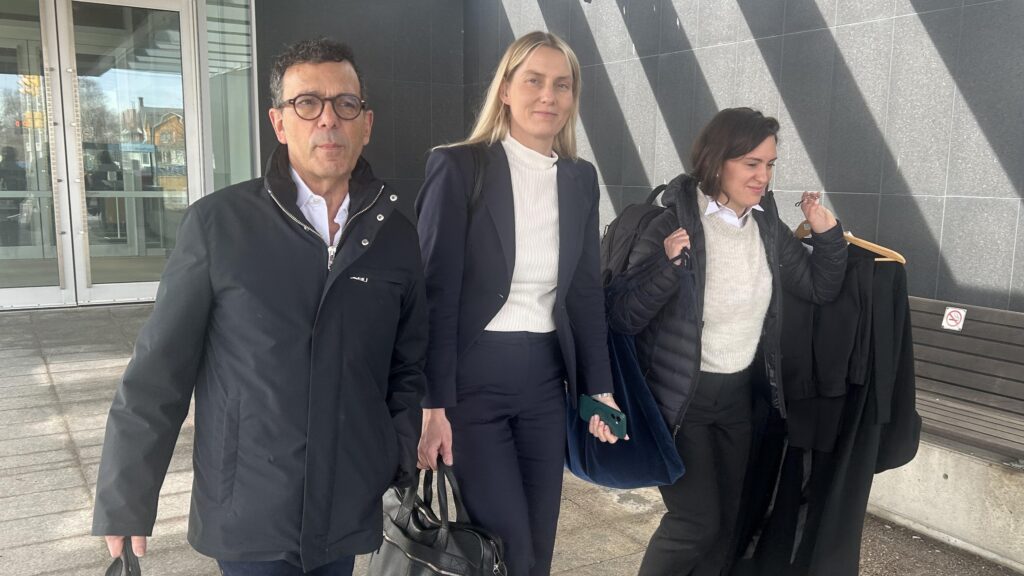
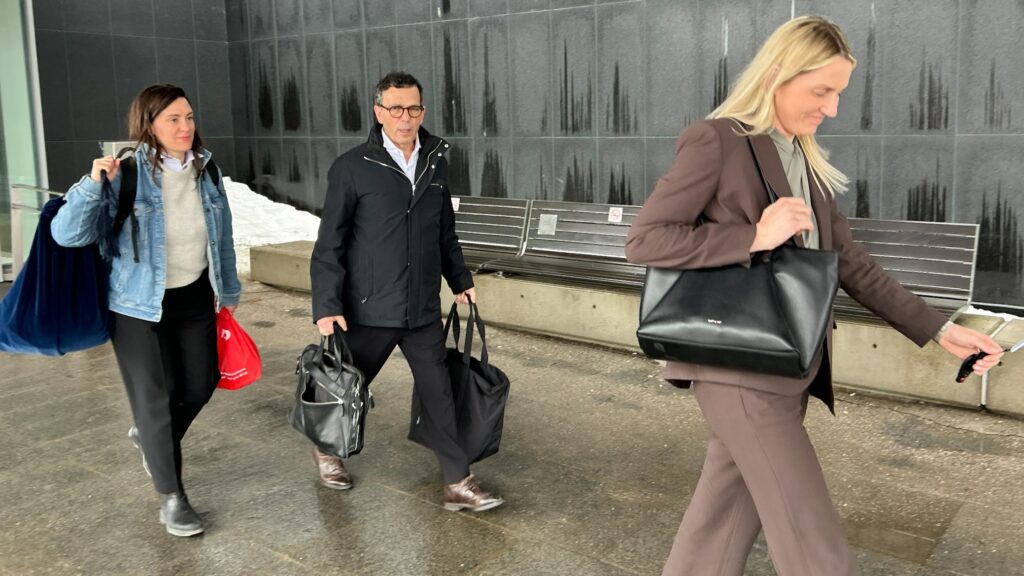
Defence lawyers Frank Addario and Nicola Langille delivered the defence’s submission, arguing that Walbourne did exactly what her role required. They said she identified a conflict of interest in the Morriseau investigation, sought outside legal advice, and ensured the matter was removed from the Thunder Bay Police Service and transferred to the OPP.
The defence argues Walbourne is innocent because:
- Walbourne was kept in the dark between her November 19 email suggesting Morriseau is obstructing the (non-criminal) internal investigation and the November 30 phone call with Hughes.
- Walbourne is not included on any of the emails from Hughes and Sylvie Hauth during this time.
- Per Addario, “Every single witness in this case has memory issues, but no one other than Ms. Walbourne is being accused of being dishonest about the memory issues.”
- Hughes said he has no memory of outside legal counsel being mentioned during the key November 30 meeting. Hauth’s notes, however, reference contacting outside counsel, and Walbourne later arranged such a meeting. Hughes also said the request of a production order for Morriseau’s phone was discussed, while Walbourne says it was not.
- Hughes testified there was no phone call between him and Walbourne on December 9. However, he also said he has no memory of several other calls with her — including calls on November 30 (an hour after the three-way call with Hauth), December 1, December 4 (twice), and December 10 — all of which phone records show did occur.
- Walbourne told the OCPC investigator that she’s giving her best recollection rather than describing events and conversations that she can recall perfectly.
- “If we’re respecting the burden of proof, her memory is working just like Sylvie Hauth and just like Ryan Hughes. She’s focused on her takeaways and her lane, which is that ‘this was a misconduct investigation in which I was involved, but now the chair is the target and I need ILA (independent legal advice).’ It would not be reasonable to ascribe a sinister motive to her recollection of the meeting, but pass off an innocent one where the Chief and Deputy Hughes think the takeaways are slightly different,” Addario said.
- The Crown’s reference to Walbourne’s personal animosity towards Morriseau or Hughes is irrelevant as Walbourne did not initiate the investigation, nor did she ever instruct anyone to make Morriseau “a target”.
- Sylvie Hauth’s police board memos reference a combination of reports from Hughes, Hauth and her own recollection. Walbourne also never denied her role in drafting these memos. Langille argues that undercuts the Crown’s theory that Walbourne was trying to deflect blame and “throw Hughes under the bus”.
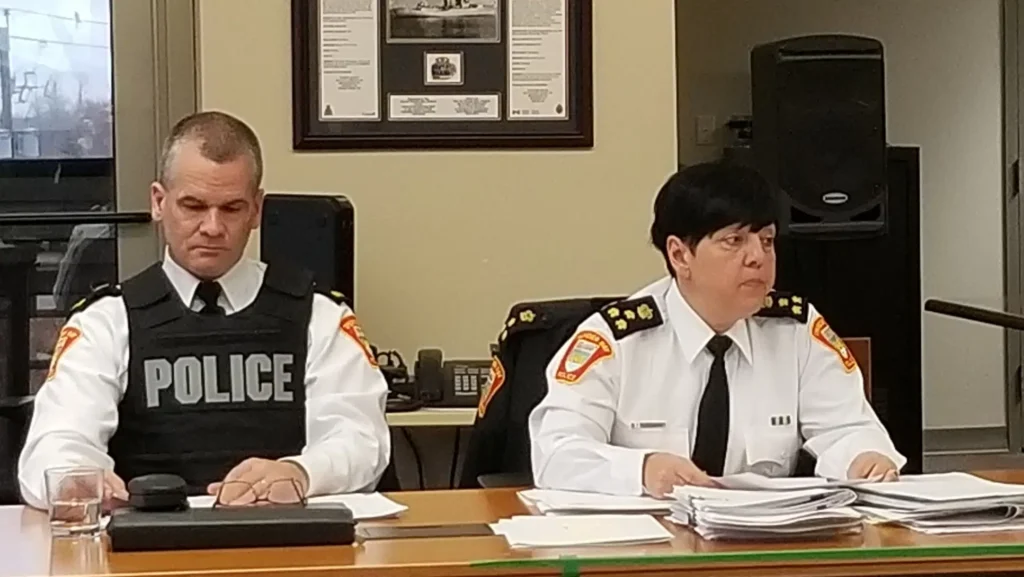
Addario also presented the possibility that all three actors in the November 30 phone call could have been honestly recalling the conversation, as they were simply “talking past each other” and nobody was clear on whether this was a criminal or regulatory investigation.
Addario pointed to Hughes’ testimony, where Hughes said he thought he could seek a production order for Morriseau’s phone and present it to the board to determine whether the matter was criminal — despite the fact that production orders are only available in criminal investigations.
The defence closed their submission by saying Walbourne is the only person in the HomeSense Investigation who had the presence of mind to get outside legal advice, which is ultimately the reason why this eventually goes to the OCPC.
Langille said the “micro-inaccuracies” the Crown may be able to prove in Walbourne’s statements are from someone who could never anticipate being charged and who tackled an unusual situation with good faith.
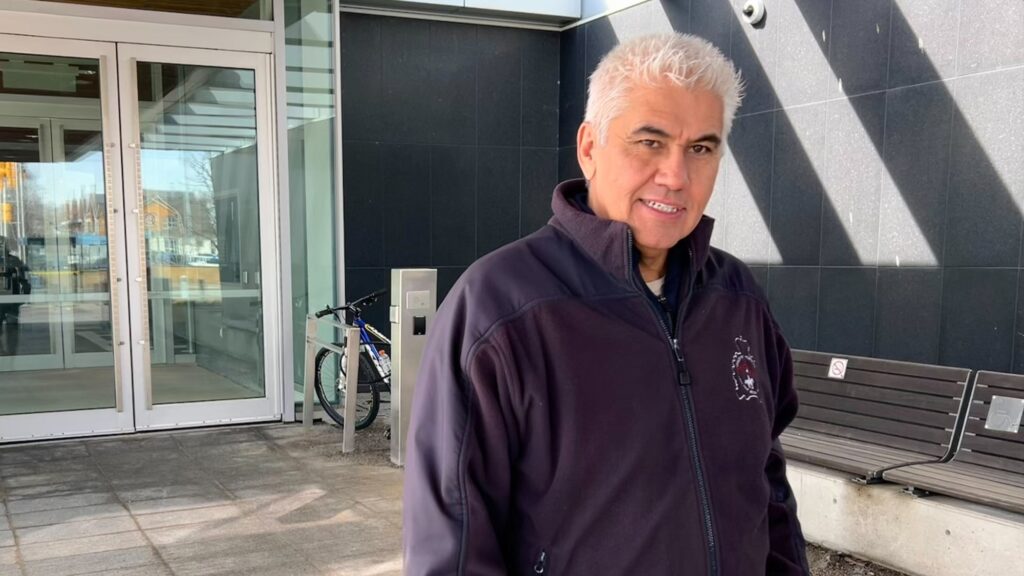
Justice Robert Goldstein will make his decision Friday.