Content Warning: This writing speaks to the realities of missing and murdered Indigenous women and girls, and the lasting impact on families and communities. Please approach with care for yourself and others.
I remember being a child, riding my bike with my helmet on, thinking I was just another kid enjoying the day in Keewatin. I was in grade five when I first noticed it. A whistle. Words shouted out of a vehicle that were in English but made no sense. All I had was the feeling that something was not right. That I was being seen in a way that did not sit right.
It is something many women come to recognize early, long before we had the language to name it. As I grew older, that awareness became clearer.
Years later, while studying radio and television broadcasting in Winnipeg, I covered an awareness walk as part of an assignment. At that time, the number most often referenced was more than 600 missing and murdered Indigenous women and girls. Even then, it felt significant. It felt like something that should have shaken the country more deeply.
Since then, we have learned that number was only part of the story.
As reporting improved and families continued to speak, the number has more than doubled. Each number represents a person. A daughter. A sister. A mother. A friend. Someone who is still loved. Someone who is still being searched for, remembered, and grieved.
What stays with me most are the stories I have heard families share.
The mothers who continue to speak their daughters’ names year after year at events and on social media. The siblings who carry memories forward, held tightly with love. The children who grow up with questions that do not always have answers. Grief does not move on.
When someone goes missing or is taken, it is not just one life that is affected. It ripples through families, through communities, and across generations. The absence becomes something people learn to live alongside.
I have seen how communities respond in those moments. I think of the search for Delaine Copenace here in Kenora. I remember how people from all walks of life came together. There was no hesitation. People showed up with their time, their energy, and their care. There was strength and love in that.
I also think about the land. The land holds meaning and memory, but it can also hold hard truths. It holds the places where someone vanished, the spaces families return to with hope and dread. And even when we don’t have the whole story, the land reminds us that what happened was real, and that people are still missing, still loved, and still being searched for.
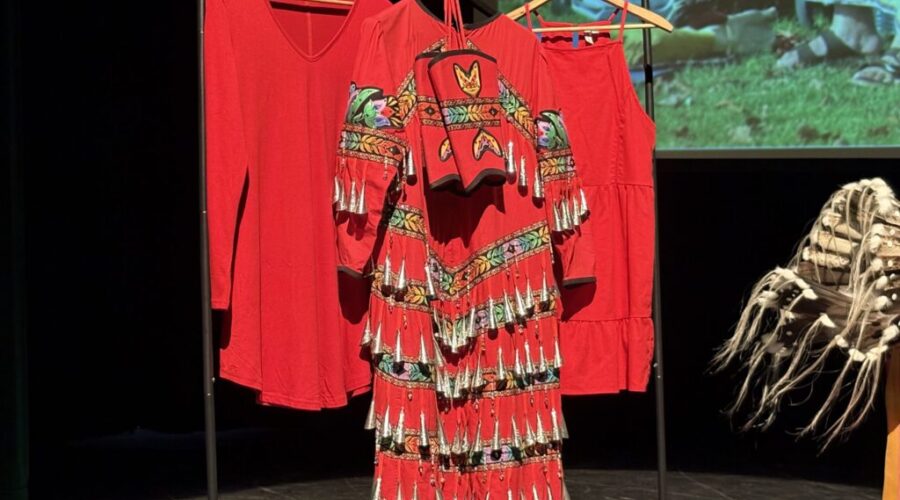
Over the years, there has been growing awareness. Red Dress Day is one way that we hold space for that awareness. The red dresses we see hanging represent lives that are not forgotten.
The National Inquiry into Missing and Murdered Indigenous Women and Girls brought forward truths that families have long known and carried. It also set out Calls to Justice that speak to the need for safety, dignity, and care for Indigenous women and girls. These are not abstract ideas. They come from real lives, real losses, and real responsibilities.
Awareness has grown, but awareness alone is not enough.
The responsibility to create safer communities extends beyond any one group. It exists within systems we rely on, the services that are available, and the ways we look out for one another in everyday life. It exists in the degree of seriousness with which concerns are taken, how quickly people respond, and the consistency of care offered.
It also shows up in how we speak about Indigenous women and girls. In how we challenge harmful assumptions. In how we choose compassion over judgment.
There is no single solution. The work is layered and ongoing. But at its core, it begins with recognizing the humanity of those who are missing and those who are grieving.
For families, this is not a single day of awareness. It is something they carry every day. It is in the quiet moments, the anniversaries, the gatherings, and the spaces left empty.
Red Dress Day is about awareness, but also how we move forward.
To move with care.
To listen more closely.
To respond with intention.
Each red dress represents someone who is loved. Someone who is still being remembered. Someone whose life mattered and continues to matter.
The least we can do is carry that with us. Not just for a day, but in how we choose to show up for one another going forward.
This piece is dedicated to the families who continue to carry love alongside grief. To the mothers, fathers, siblings, children, and extended families who speak names, hold memories, search without rest, and show strength in ways the world does not always see. Your loved ones are not forgotten. Your grief matters. Your courage and care continue to guide how we remember, how we listen, and how we move forward together.