


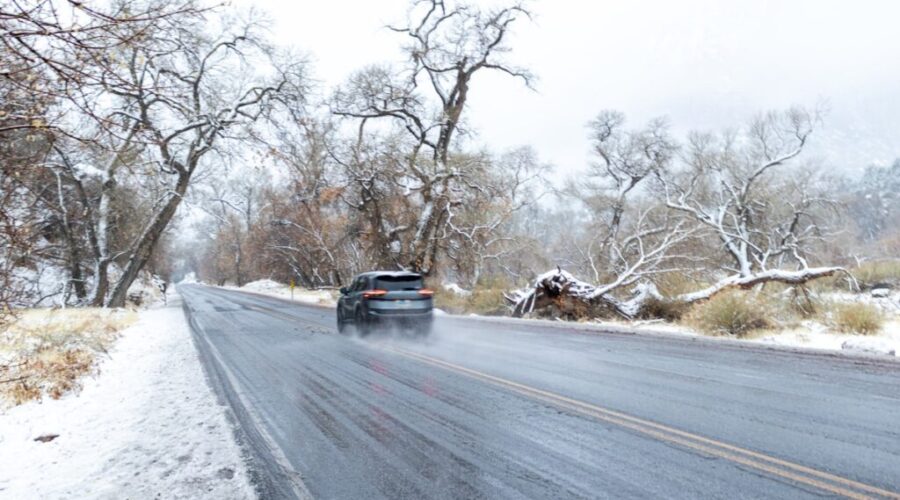
Winter driving in Northern Ontario is unlike driving anywhere else in Canada. Long stretches of rural highway, fast‑moving traffic, blowing snow, and sudden whiteout conditions make visibility one of the most critical safety factors on the road. Yet every winter, drivers head out with vehicles still covered in snow — creating dangerous conditions for themselves and everyone around them.
One of the most overlooked hazards is the buildup of snow on LED taillights, which are now standard on most modern vehicles. While LEDs are bright and energy‑efficient, they produce very little heat. This means they cannot melt snow or ice, and taillights can quickly become completely obscured during a storm or even after a short drive in blowing snow.
When taillights are covered, your vehicle becomes nearly invisible from behind — especially on highways where visibility is already compromised. At 90–100 km/h, even a moment of reduced visibility can lead to a serious collision.
Why LED Taillights Make Snow Buildup Worse
Older incandescent bulbs generated heat that helped melt snow and ice. LED lights do not. As a result:
- Snow and slush accumulate quickly on taillights
- Brake lights and turn signals become invisible
- Drivers behind you cannot see your vehicle until they are dangerously close
- Visibility drops even further in whiteout or nighttime conditions
On Northern Ontario highways — such as Highway 11, Highway 17, and the Trans‑Canada corridor — this becomes a life‑threatening risk.
Ontario Law: You Must Clear Snow and Ice Before Driving
Ontario’s Highway Traffic Act requires that vehicles be kept in safe operating condition. This includes:
- Lights must be visible and unobstructed
- Drivers must maintain clear visibility
- Vehicles must not pose a hazard to others
Drivers can be charged for:
- Driving with obstructed lights (HTA Section 62)
- Operating an unsafe vehicle
- Failing to maintain a clear view of the road
In addition, Ontario has previously introduced legislation specifically targeting snow and ice removal from vehicles, reinforcing the expectation that drivers must clear their vehicles before travelling.
Even without a specific “snow removal” section, police across Ontario regularly lay charges under existing safety provisions when snow or ice creates a hazard.
The Real‑World Risks of Not Clearing Snow
Failing to remove snow from your vehicle can lead to:
- Invisible taillights, making rear‑end collisions far more likely
- Snow or ice sheets flying off, striking vehicles behind you
- Reduced rear visibility, especially if mirrors or cameras are covered
- Other drivers misjudging your speed or braking
Each of these risks is amplified on highways where reaction times are shorter and speeds are higher.
A Few Minutes of Cleaning Can Prevent a Lifetime of Consequences
Before driving — especially in Northern Ontario winter conditions — take the time to:
- Clear all windows, mirrors, and cameras
- Brush off the roof, hood, and trunk
- Remove snow from headlights and taillights
- Ensure brake lights and turn signals are fully visible
- Clear snow from your license plate
These simple steps ensure you can see — and be seen — on the road.
Final Thoughts
Clearing snow from your vehicle isn’t just courteous — it’s essential for safe winter driving. LED taillights don’t melt snow, visibility drops fast in Northern Ontario weather, and Ontario law requires that your vehicle be safe and visible at all times.
A few minutes with a snow brush can save lives.

