


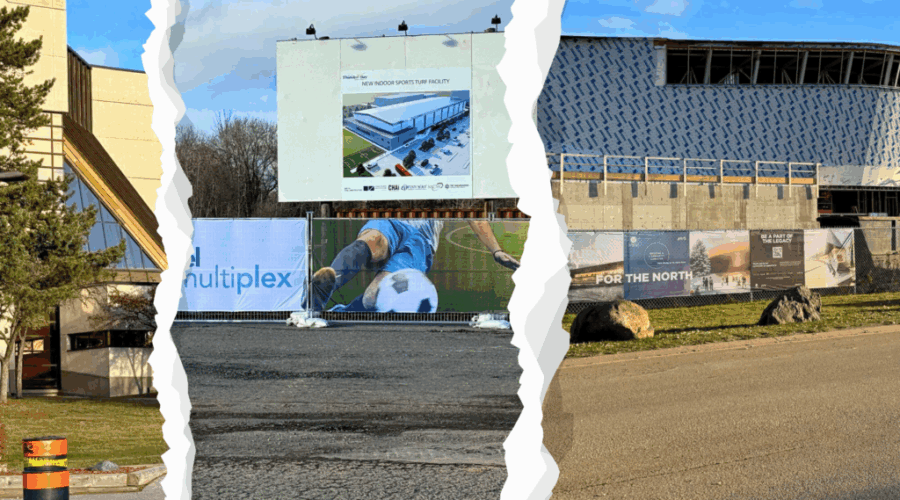
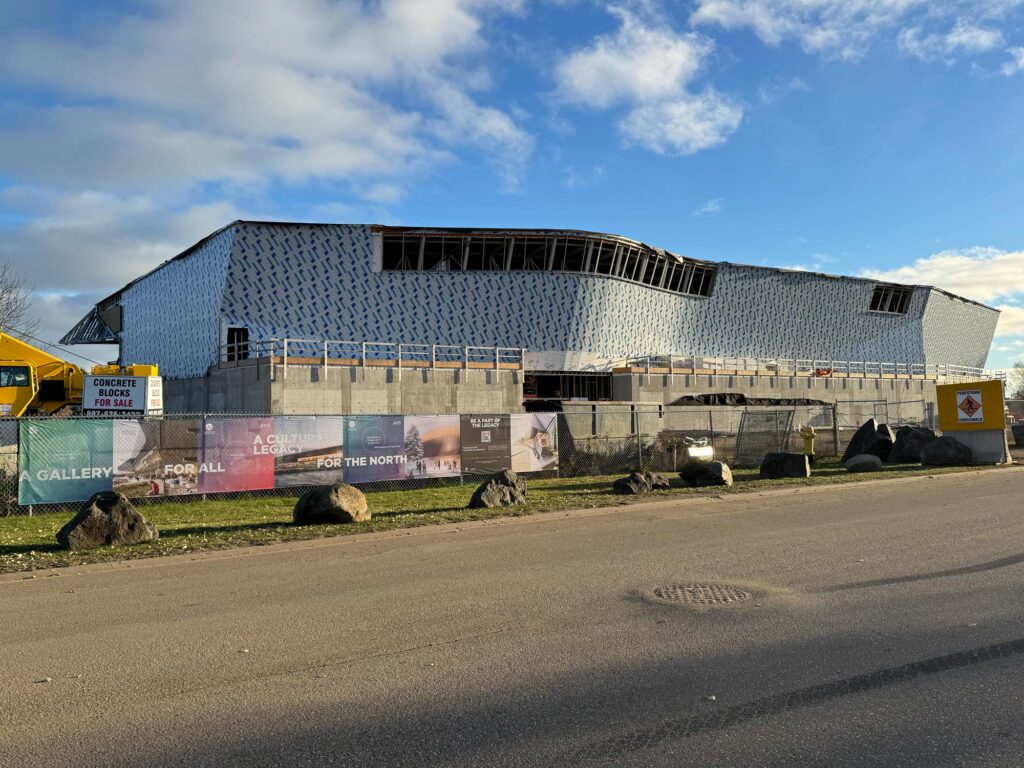
Every time Thunder Bay City Council debates funding for the arts, you can feel the hesitation being broadcast in the room — that quiet sense that maybe culture is a “nice-to-have,” not a need. It’s a feeling that crept into the latest debate over the Thunder Bay Art Gallery’s new waterfront home. And while the council ultimately did the right thing by approving an additional $2.5 million to help the project continue moving forward, the conversation around that vote said as much about our city as the result itself.
Some councillors treated the request like a rescue mission rather than an investment. “I don’t think there’s an appetite out in the community for this,” said Councillor Albert Aiello during a standing committee discussion. “We have got to stop the precedent of bailing people out. How you can start a building and not have the money to finish it… it’s very difficult to understand that.” It’s hard to imagine those same words being used for a hockey rink or swimming pool — although we’ve closed some of those too. Dease Pool, once a neighbourhood gathering place for generations, was permanently shut down in 2019 after years of disrepair. The site is now being transformed into an expanded Dease Park with new playgrounds and a splash pad.
The final gallery vote — eight in favour, five opposed — demonstrated fiscal caution, but it also revealed that Thunder Bay still views the arts as something to be defended, rather than celebrated.
That thinking misses what the arts really are. They’re not a luxury or an add-on. They’re infrastructure. They connect people, shape identity, and strengthen the economy.
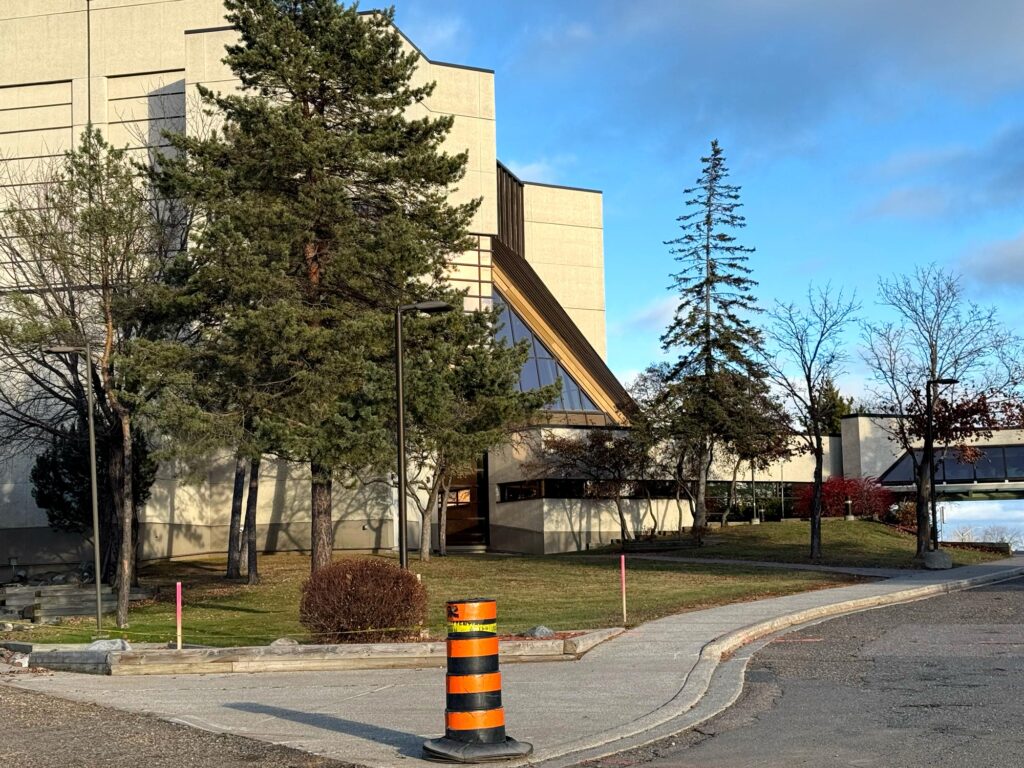
According to the Ontario Arts Council’s 2025 Impact Report on the economic contribution of the arts, Ontario’s arts and culture sector generates $26.4 billion to $27.8 billion in economic output each year (depending on subsector scope) and supports approximately 270,000 to 320,000 jobs across the province. The numbers scale down but remain powerful in our region: the report shows Northwestern Ontario’s cultural sector generated $143,263,000 in GDP in 2022 and supported 1,896 jobs. These figures — drawn from the OAC’s regional economic table — reflect not just performances or exhibitions, but tourism, local supply chains, education, and what the report calls “the ripple effects” of creative industries on small-city economies. Those aren’t weekend hobbies. That’s an industry.
And yet, when we discuss arts funding, we don’t use the same language as we do for recreation. The City of Thunder Bay spends about $13.9 million each year operating its recreation and culture programs — roughly four cents of every tax dollar. We subsidize ice time, field rentals, and community sports because we understand that access to recreation builds healthy bodies and strong communities. We don’t debate whether kids deserve to play sports. We just make it happen. The same instinct should apply to the arts.
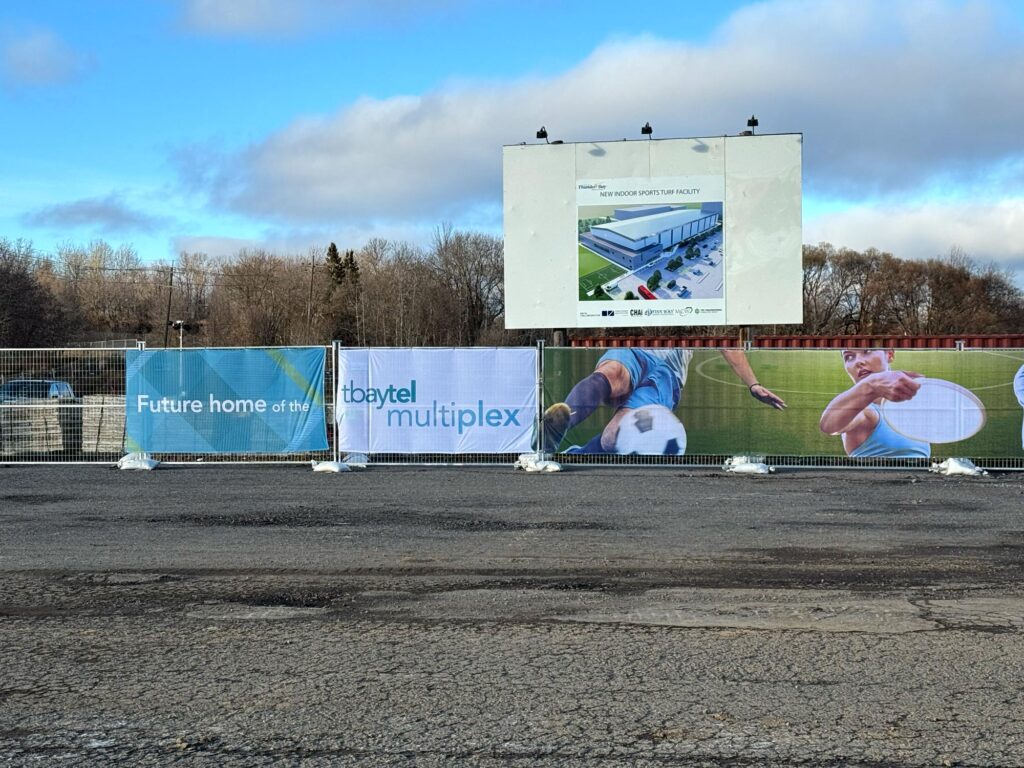
Look at how the new Tbaytel Multiplex moved through the approval process — a $32.65-million indoor turf facility scheduled to open in 2026. It was largely met with excitement, although there’s still debate about its value and whether taxpayers should foot the bill. As with all major city projects, not everyone sees it as a priority — but the overall tone has been one of optimism. The project is funded through a mix of reserves, Canada Community-Building Fund dollars, and a $4.5-million Tbaytel special dividend, along with $500,000 in naming-rights revenue, paid at $50,000 per year for ten years. No one framed it as a bailout. Most understood it as an investment in health, tourism, and community pride.
And on that front, credit where it’s due: the Multiplex team successfully secured a naming sponsor — something the Thunder Bay Community Auditorium, which has advertised naming-rights partnerships for years, has never been able to achieve. It’s a reminder that arts venues often face steeper challenges attracting private-sector partners, even when their public impact is just as significant.
The new Thunder Bay Art Gallery will do for our cultural life what the Multiplex will do for recreation. It will provide us with a space to see ourselves through Indigenous art, northern storytelling, and creative expression. It will attract visitors, inspire students, and help define who we are beyond industry and geography. That’s social infrastructure, every bit as real as a sheet of ice or a soccer field. It builds empathy, connection, and confidence. It gives people reasons to stay, to collaborate, and to imagine something better.
We often say Thunder Bay can’t afford big cultural investments. The truth is, we can’t afford not to make them. A city that only builds arenas forgets its identity. A city that only builds galleries forgets who it’s for. Both matter. Sports build muscles. The arts build imagination. And a healthy community needs both.
We don’t have to pit the soccer pitch against the art gallery. Both are fields of play — one for the body, one for the soul. The question isn’t whether we can afford the arts. It’s whether we’re ready to value them. When we do, we’ll stop arguing about what Thunder Bay can afford and start deciding what kind of city we want to be.


