


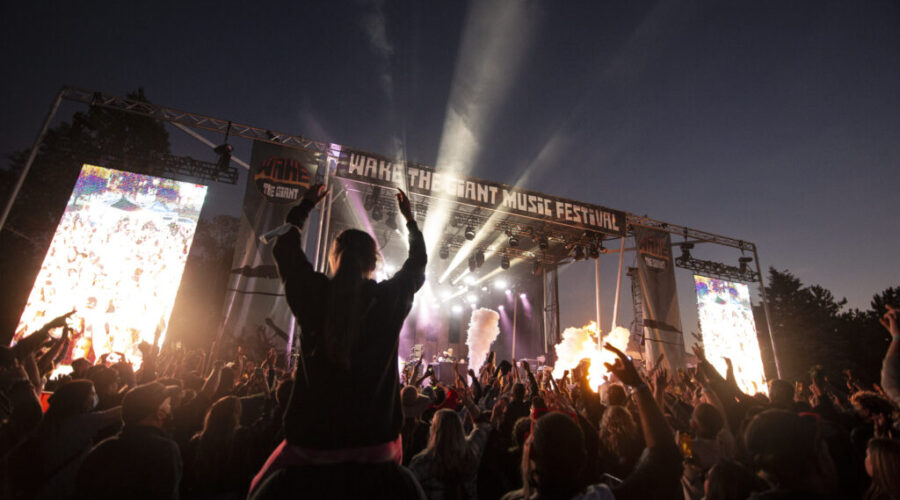
On the shores of Lake Superior, where the lights of the big stage reflect off the water and thousands of voices rise together, Wake the Giant transforms Thunder Bay into something extraordinary. It may look like a music festival from the outside, but at its core, it’s a movement — a celebration of culture, inclusion, and community that leaves everyone who attends feeling like they’re part of something bigger.
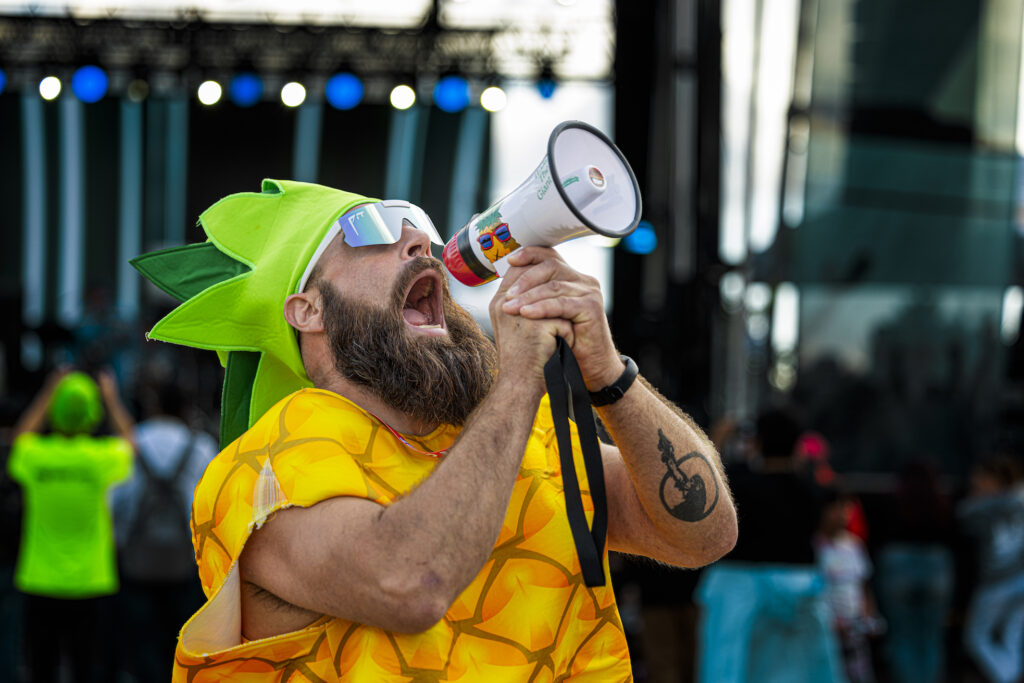
“It’s more than a music festival. People come for the bands, sure, but they leave with this sense of being part of something bigger. It’s about community, about showing up for youth, and that really hits home here,” says Sean Spenrath, Wake the Giant Co-founder and Organizer.
The festival was born out of a powerful mission: to create a more welcoming Thunder Bay for Indigenous youth who move to the city for education. That mission pulses through every beat, every song, every conversation. You see it in the faces of the students who arrive to find an entire city gathered in their honour. For Spenrath, those stories are how success is measured. “Ticket sales matter, but honestly, it’s the stories that stick. It’s when a student says they finally feel at home in Thunder Bay. Or when Malachi Beardy (student) shares the story about the time he played a song he composed at the festival in front of thousands and it was the most memorable night of his life. When you see people connecting who might not have crossed paths otherwise. That’s the real win.”
This year, nearly 6,700 people are expected to attend. That’s families, students, neighbours, and visitors filling hotels, restaurants, and shops across the city. “Culturally, it brings people together across communities. Socially, it makes the city feel more welcoming. And economically, it fills hotels, restaurants, and shops. You feel the ripple effect everywhere that weekend.”
Spenrath says the draw is growing beyond the city itself. “I hope so. People are traveling here for the festival now. It’s not just the music, it’s the experience.”
And for Thunder Bay, that means proving it can host on a big stage. “It shows we can do it, it’s a lot tougher than doing it in a big city though. With community support, Thunder Bay can pull off something on this scale and make it memorable. Without that buy in every single year, it’s a tough task to pull off.”
The lineup reflects that same spirit of connection. “We’re intentional about it. The big names bring people in, but Indigenous and local artists are at the heart of the festival. That balance makes the lineup special.”
This year, global superstars the Black Eyed Peas are taking the stage. “It’s massive. They’re one of the biggest groups in the world, and having them here puts a global spotlight not just on the festival, but on the students and the message behind it.”
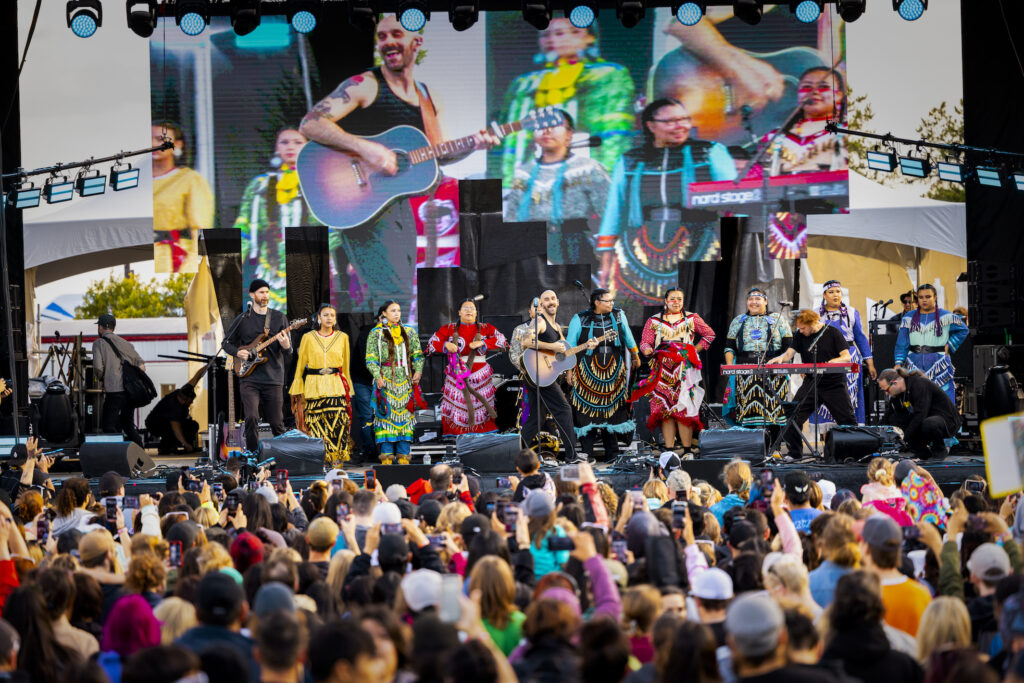
Just as important are artists like Crystal Shawanda and Wyatt C. Louis. “They ground it. Their voices bring strength and authenticity, and they show the importance of Indigenous representation on that stage.”
That mix is what makes Wake the Giant resonate across generations. “It’s the mix. You’ve got Prozzäk for the nostalgia, Neon Dreams for fresh energy, and everything in between. It means different generations and groups all find something they love.”
But Wake the Giant isn’t just about the stage. It’s the smell of bannock and barbecue drifting from the food vendors, the art and craft tents bursting with creativity, the Kids Zone where children run free, all designed to make the festival feel like a community gathering. That’s why kids under 11 get in free. “Because we want families here. Festivals should be part of kids’ memories growing up. Making it accessible means parents can bring them without worrying about the cost. We also want to educate them so they grow up respecting Indigenous culture and they are more welcoming.”
Thunder Bay has long wrestled with a reputation for racism and division. Wake the Giant is helping rewrite that story. “I think it already is. One festival won’t erase everything, but every year, we’re showing a different Thunder Bay — one that’s welcoming, vibrant, and proud to stand against racism.”
The mission extends beyond the festival grounds, too. “It’s opened up conversations people might have avoided before. It gives tools to workplaces and individuals to be more inclusive, and you can feel that shift happening.”
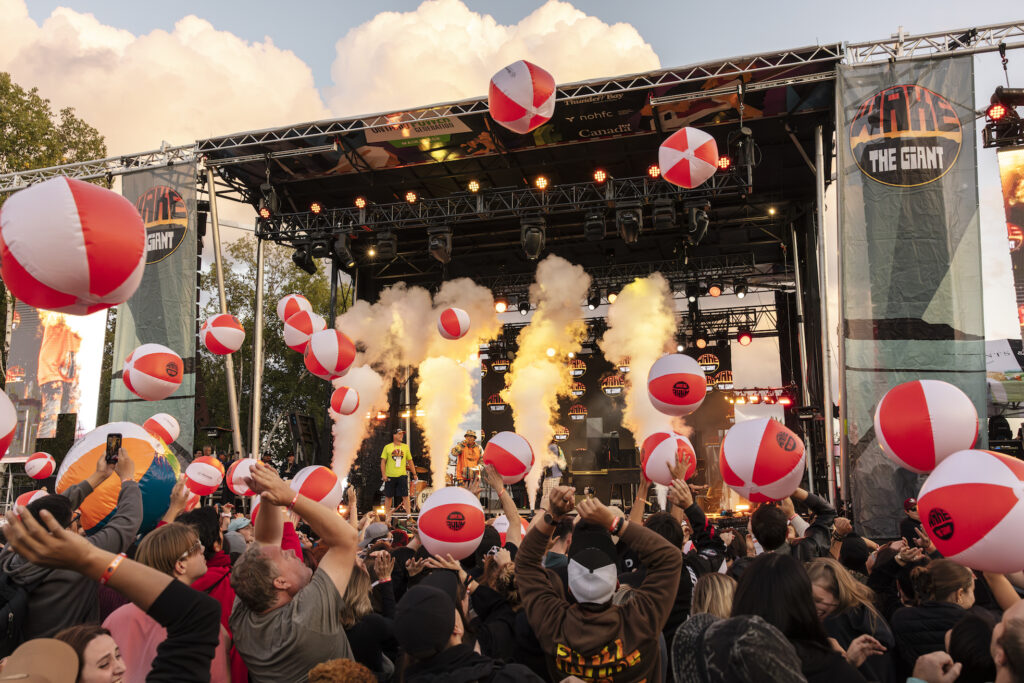
And you can see the impact most clearly in the youth themselves. “You see it in the students’ faces. They walk into the festival and realize this entire city is showing up for them. That’s powerful.”
For those attending for the first time, Spenrath says the advice is simple: “An incredible mix — big stage, amazing artists, Indigenous culture, food, art, kids running around, and just this energy that’s hard to put into words. It feels like Thunder Bay at its best.”
And for him, what lingers is something you can’t measure. “The feeling. That moment where the music, the lights, and the crowd all come together — and you realize you’re part of something bigger.”
What does he hope young people take away? “That they belong. That Thunder Bay can be a place of pride, inclusion, and opportunity. And that music and culture are powerful tools for change.”
This year’s Wake the Giant Festival takes place Saturday, September 6, 2025, at Marina Park in Thunder Bay, with performances by the Black Eyed Peas, Prozzäk, Neon Dreams, Crystal Shawanda, Wyatt C. Louis, and more. For full details, tickets, and cultural awareness resources, visit wakethegiant.ca. Whether it’s your first time or your fifth, expect to leave with one lasting truth: when Thunder Bay comes together, everyone belongs.
Wake the Giant can be summed up in one sentence: “It’s a celebration that says loud and clear: everyone belongs here.”


