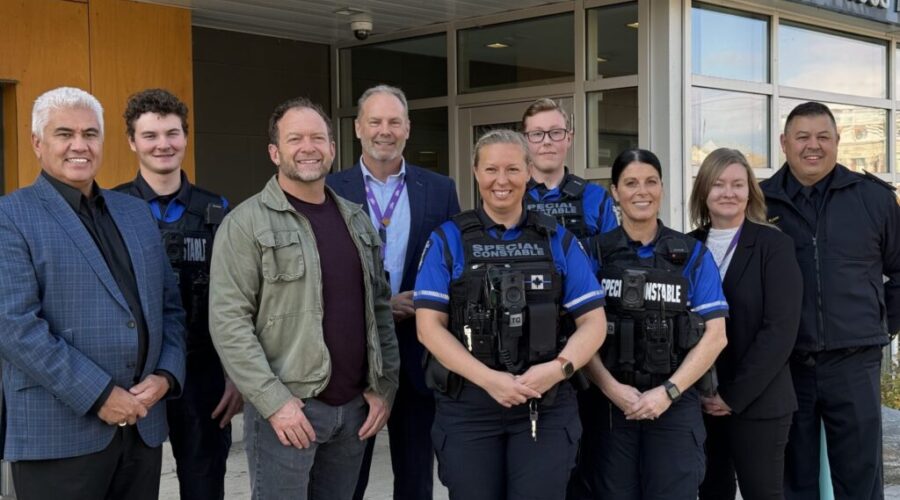
A new team of four special constables will be tasked with patrolling and servicing District of Thunder Bay Social Services Administration Board (DSSAB) buildings.
DSSAB represents a cornerstone of Thunder Bay’s efforts to build and maintain affordable housing units.
However, problematic tenants are among the key challenges that come with constructing and maintaining housing for the city’s most vulnerable individuals.
Inspector Jason Rybak of the Thunder Bay Police Service (TBPS) says the idea for a Housing Safety Unit was inspired by a similar program in Toronto, launched in 2022.
Toronto’s Community Safety unit has had the effect of reducing 9-1-1 calls in scenarios where a full emergency response may not be needed.
Rybak frames the idea as a way of “helping get people in the right streams of support, versus having to deal from an enforcement side.”
TBPS is presenting the Housing Safety Unit as a pilot program: the beginning of something which could take on a greater role if it is successful.
The new team is comprised of four newly trained police special constables coming from a variety of community-oriented backgrounds.
To begin with, the four special constables will be assigned to three of DSSAB’s most issue-prone buildings: Andras Court, McIvor Court, and Spence Court, together comprising about 500 housing units, or one-fifth of DSSAB’s total housing stock.
One of the new constables, Krystal Wiwcharyk, comes from a social work background. She believes that her experience in working with the disadvantaged will inform the way she handles her new role.
“I want to see some changes made, a positive shift,” she says. “We want to see less people, vulnerable people inside the justice system. If we can deter them in some form, even one person, we’ve made a change.”
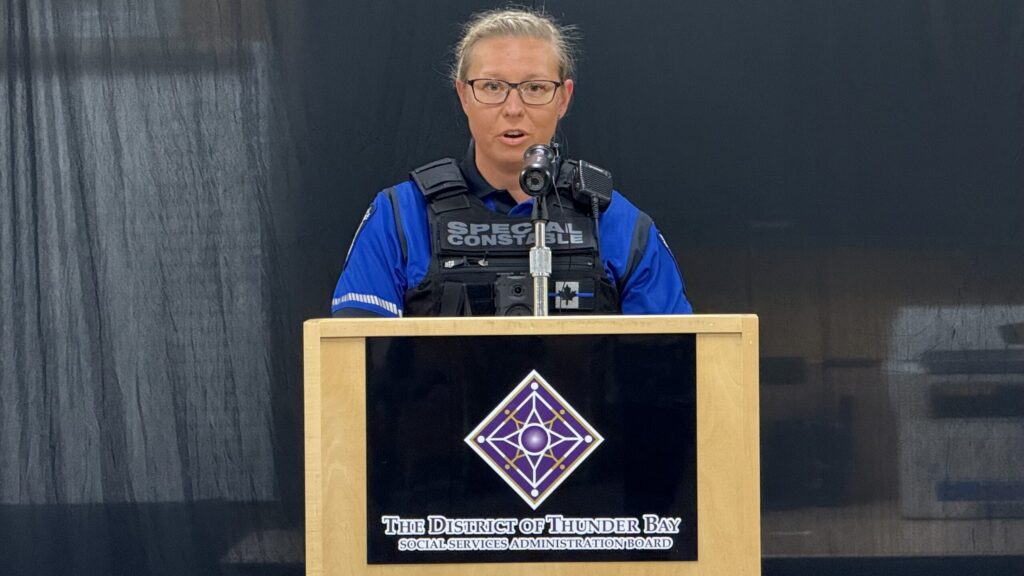
The Special Constables have been given a slightly condensed and modernized form of standard Ontario police cadet training. They will not have all the powers of police officers, but will be able to make arrests, take witness statements, and guard crime scenes.
“It really opens up a whole new toolbox for us as a police service by having these officers take a more community services approach,” Inspector Rybak explains.
DSSAB CEO Ken Ranta says that as a pilot program, success for the project will be measured in the reception of DSSAB tenants to the new constables, as well as in the new team’s ability to reduce pressure on Thunder Bay’s emergency services.
“We’re looking at calls to properties, and if we can have an impact on that, and the opportunity to free up patrolling officers to address other calls,” says Ranta.