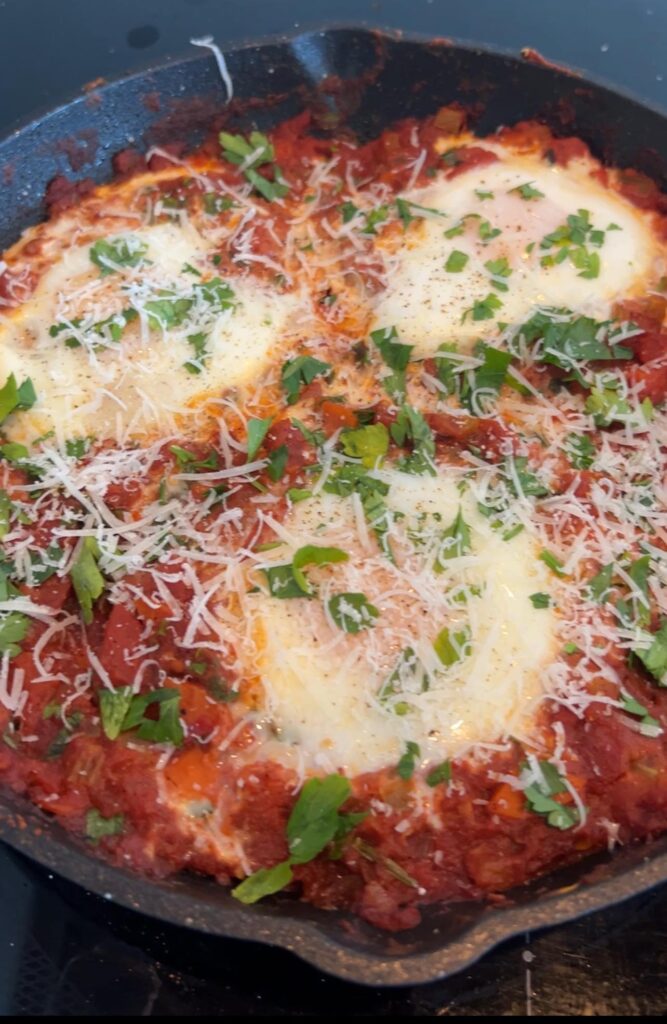
A Brief History of Shakshuka
Shakshuka is more than just a dish-it’s a story simmered in tomatoes and spices. Its roots trace back to North Africa, particularly Tunisia, where families perfected the art of poaching eggs in a rich, spiced tomato sauce. Over time, shakshuka traveled across the Mediterranean and Middle East, becoming a staple in Israeli cuisine and beloved worldwide. The name itself means “all mixed up” in Arabic, a fitting description for a dish that blends simple ingredients into something extraordinary.
Today, shakshuka is celebrated as a hearty breakfast, a comforting lunch, or even a light dinner. It’s rustic, communal, and endlessly adaptable-proof that the best recipes are often the simplest.
How to Make Shakshuka (Video Below)
This recipe comes together in two main steps: making the tomato sauce and cooking the eggs.
Step 1: Make the Tomato Sauce
- Heat extra virgin olive oil in a large, heavy skillet or pan with a lid.
- Add chopped onions, bell peppers, and garlic, seasoning with kosher salt, coriander, paprika, cumin, and crushed red pepper flakes.
- Sauté for about 5 minutes until the vegetables soften.
- Stir in fresh diced tomatoes (about 6 medium vine-ripe) and ½ cup of tomato sauce. If fresh tomatoes aren’t available, canned tomatoes work perfectly.
- Bring to a boil, cover, and simmer for 15 minutes. Uncover and cook a few minutes longer until the sauce thickens.
Step 2: Add the Eggs
- Use the back of a spoon to make small wells in the sauce.
- Crack an egg into each well, nestling them gently.
- Cover and cook over medium-low heat until the whites are set but the yolks remain soft and runny. (Cook longer if you prefer firmer eggs.)
Step 3: Garnish and Serve
- Sprinkle with fresh parsley and mint.
- Serve immediately with warm bread for dipping-pita, challah, or a crusty loaf are all excellent choices.
What to Serve with Shakshuka
Shakshuka is versatile and pairs beautifully with a variety of sides:
- For breakfast or brunch: Serve with pita, challah, or crusty bread.
- For lunch: Add a refreshing side salad, like a Mediterranean chickpea or white bean salad.
- Vegetarian feast: Make shakshuka the centerpiece of a mezze spread with falafel, roasted eggplant, or skordalia (Greek potato dip).
- With meat: Brown ground lamb or beef with olive oil, salt, pepper, and a touch of allspice. Add it to the sauce before simmering with tomatoes. Leftover lamb chops or roast beef also make a delicious topping.
Easy Shakshuka Recipe
Prep Time: 10 minutes Cook Time: 30 minutes Total Time: 40 minutes Cuisine: Mediterranean, Middle Eastern, Tunisian Serves: Up to 6
Ingredients
- 3 tbsp extra virgin olive oil
- 1 large yellow onion, chopped (I prefer to use shallots since their mild)
- 2 green peppers, chopped
- 2 chopped up carrots & 2 celery stalks *optional…I like to add more veggies for extra vitamins!*
- 2 garlic cloves, chopped
- 1 tsp ground coriander (and/or chili powder) (have fun with your spices! choose your favourites!)
- 1 tsp sweet paprika (or if you prefer smoked paprika that will work too!)
- ½ tsp ground cumin
- Calabrian Chilies or a pinch red pepper flakes (optional)
- Salt and pepper to taste
- 6 medium tomatoes, chopped (about 6 cups)
- ½ cup tomato sauce
- 6 large eggs
- ¼ cup chopped fresh parsley
- ¼ cup chopped fresh mint
Instructions
- Heat olive oil in a large cast iron skillet. Add onions, peppers, garlic, spices, salt, and pepper. Cook until softened, about 5 minutes.
- Add tomatoes and tomato sauce. Cover and simmer for 15 minutes, then uncover and cook until thickened. Adjust seasoning.
- Make 6 wells in the sauce and crack an egg into each. Cover and cook on low until whites are set.
- Garnish with parsley and mint. Serve with warm bread.
Tips & Storage
- Make Ahead: Prepare the tomato sauce a day in advance. Store in a sealed container in the fridge, then reheat and add eggs when ready.
- Leftovers: Keep for 1–2 days in the fridge. Reheat gently, adding a splash of liquid if needed.
- Meat Option: Cook ½ lb ground lamb or beef separately, then add to the sauce before simmering.