


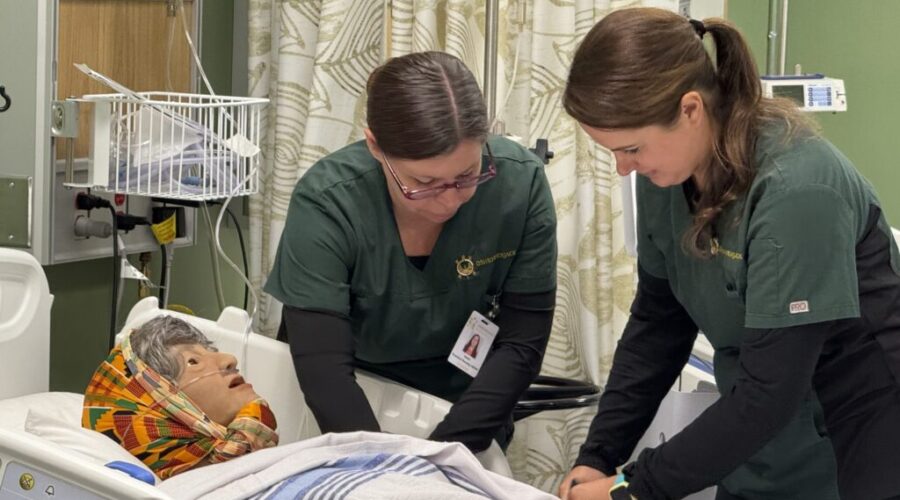
After years of effort to meet more than two dozen quality assurance standards, the Oshki-Wenjack Education Institute in Thunder Bay is now a provincially accredited institution.
“Today is another new beginning,” says Oshki-Wenjack president Lorrie Deschamps.
Now that Oshki-Wenjack is accredited, the institute will be able to offer more for its students.
“We are going to have the opportunity to create our own programming based on our community needs, and we’re able to provide more cultural programming. We’re going to be able to grant our degrees and certificates instead of going through the partnerships that we have right now,” Deschamps says.
Oshki-Wenjack is small – the institute currently has between 200 and 250 students, and classes tend to feature 15-20 students each.
Fabian Batise is a Co-Chair of the institute’s governing council. He explains that students from First Nations communities are attracted to the institute’s offerings.
“It’s the differences that we offer. We offer the cultural, the land-based approach. Maybe the opportunity to work from your First Nation as part of the programming going back and forth from the school to the First Nation,” Batise says. “And here it offers that extra degree of personal attentiveness that we have.”
The institute’s greatest success so far has arguably been its nursing program. Deschamps states the institute has a wait-list for nursing, and Batise believes the program is unrivalled when it comes to First Nations health services.
Merging Western teaching and First Nation traditions
Pearl Helton is two weeks from graduating from Oshki-Wenjack with a Bachelor of Social Work. She appreciates that she has access to everything a university would provide, but in a smaller, more intimate, and culturally sensitive space.
When students at Oshki-Wenjack aren’t in the classroom, they have opportunities to connect with the land and the great outdoors. Helton particularly appreciated the chance to be in sharing circles with an elder.
“We were able to talk about what it was that was on our mind that day, and able to smudge, and able to have that peace to share and to be safe,” Helton remarks.
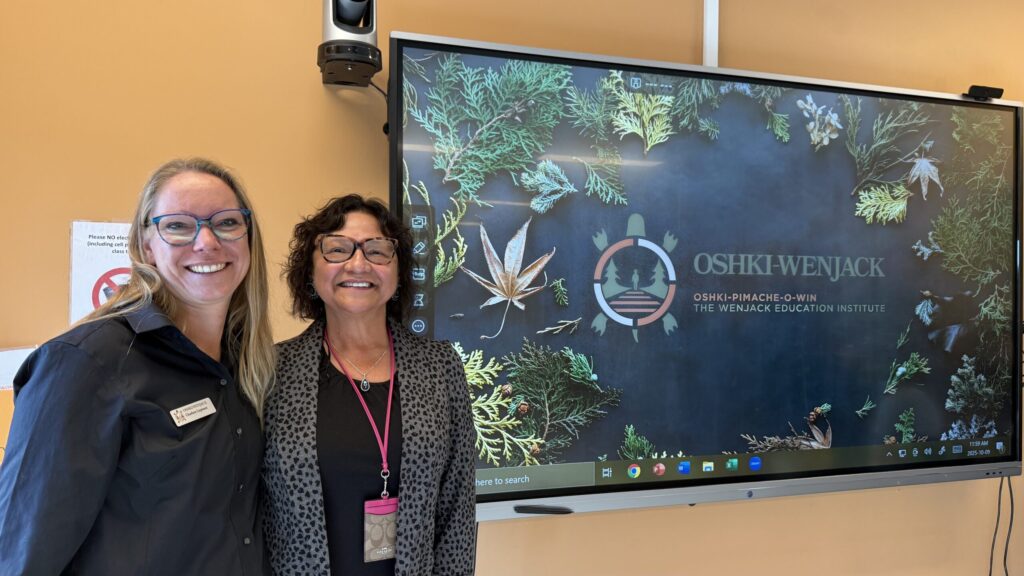
Helton feels that enrolling in Oshki-Wenjack meant finding a community that understood her. “This institution is more than a school; it is a place of cultural safety, support, and reconciliation in action.”
President Deschamps says the next step for Oshki-Wenjack is to begin looking for a proper campus space with its own grounds. The process of reaching towards that has only just begun, but in the meantime, the institute will continue to operate at its location in Fort William.
Helton may be almost ready to move on, but she feels Oshki-Wenjack will be a boon for First Nations.
“Education is a powerful medicine. It is. “It transforms not only individuals, but entire families and communities,” Helton says. “Oshki-Wenjack makes that possible for students from remote First Nation communities who might otherwise never have access to post-secondary education. Its programs connect culture, identity, and academics.”


