You can watch this week’s round up below.
Thunder Bay city council approved several administrative and infrastructure-related items Tuesday night, including steps toward residential development on four city-owned properties, the appointment of an acting fire chief and funding for engineering studies at the Community Auditorium.
The meeting began at 6:33 p.m. with the mayor and all councillors in attendance. Coun. Geurtiga participated online. Council adjourned at 9:07 p.m.
Council approved a zoning-related application for a temporary secondary dwelling, known as a garden suite, on a rural property on John Street Road. The self-contained unit would be permitted for up to 20 years and is typically intended for family members such as aging parents or adult children.
A neighbouring property owner raised concerns about whether the existing well and septic system could support an additional residence and whether the unit could be used for short-term rental purposes. City planning staff said those issues are addressed during the building permit process and that the unit must meet all health and safety standards before occupancy. Council approved the application with the condition that the unit must be removed by 2046 unless a future extension is granted.
Council also received a presentation from Community Economic Development Commission CEO Jamie Taylor outlining the organization’s new multi-year strategic plan. The plan focuses on five areas: natural resources, workforce and immigration development, tourism development, strengthening community and business support. The strategy is intended to guide investment attraction, population growth and business development efforts across the city. No formal vote was required on the presentation.
Council authorized the appointment of Dave Tarini as acting chief of Thunder Bay Fire Rescue, replacing Dave Paxton, who is retiring. The appointment is intended to maintain operational continuity during the leadership transition.
Council also approved a budget adjustment requested by Fire Services related to future vehicle purchases. One million dollars was shifted from the 2027 pumper truck budget to the aerial ladder truck budget to allow earlier payment and qualify for a supplier discount. City staff said the timing change could save approximately $90,000. No equipment purchases were cancelled or delayed, and the total budget for both vehicles remains unchanged.
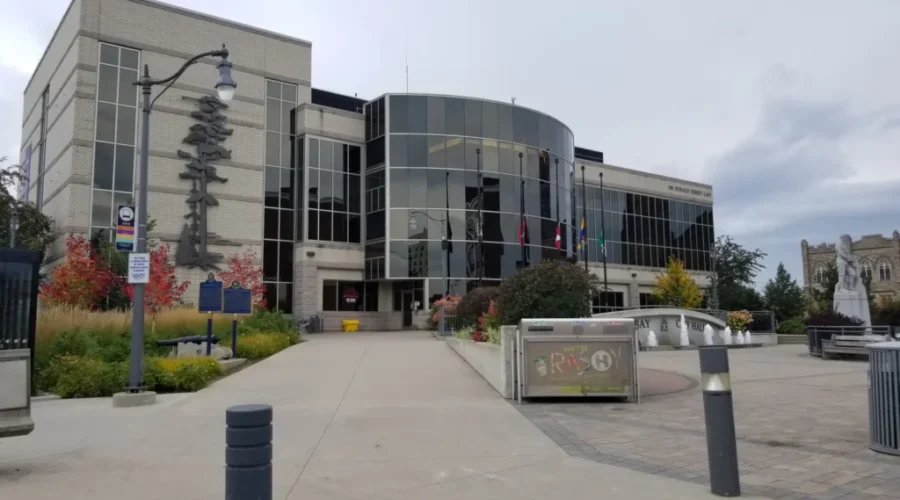
Funding was also approved for engineering studies at the Thunder Bay Community Auditorium. Council authorized up to $93,000 from the facility’s Capital Reserve Fund, which is dedicated to building maintenance and currently holds close to $300,000. The auditorium is owned by the city but operated by a non-profit organization responsible for maintenance under its lease agreement. The engineering studies are required to assess future repair needs and to support applications for external funding for renovations. The item passed without discussion.
The most significant item of the evening involved declaring four city-owned properties surplus to allow negotiations with developers for residential projects. The sites are located on Fanshaw Street, Tokio Street, Tupper and Camelot, and Arundel Street. They were selected through a public call for proposals, and city staff estimate the sites could support more than 1,000 new housing units.
Declaring the lands surplus does not approve final development plans but allows the city to begin formal negotiations and detailed planning, including further studies, rezoning on some sites and additional public consultation.
Residents raised concerns about building height, traffic, greenspace and privacy during earlier consultations. In response, some proposals were reduced in scale, including the Arundel Street project, which was revised from approximately 600 units to about 400 units.
Coun. Agarwal requested that council vote on each property separately. Fanshaw Street and the Tupper and Camelot site were approved unanimously. The Tokio Street and Arundel Street sites were approved with Agarwal voting against both. The overall motion to declare the lands surplus carried.
Administration estimates the land sales would generate approximately $2 million to $3 million in one-time revenue for the city. The larger financial impact would come from development, with construction activity estimated at roughly $400 million and new annual property tax revenue projected between $1.4 million and $2.8 million once the developments are completed and fully assessed.
Council’s next regular meeting is scheduled later this month.