


On Tuesday, Canada put out its spring economic update, which includes several initiatives for workers in the trades, a lower-than-expected deficit, and information about Canada’s new sovereign wealth fund, the Canada Strong Fund.
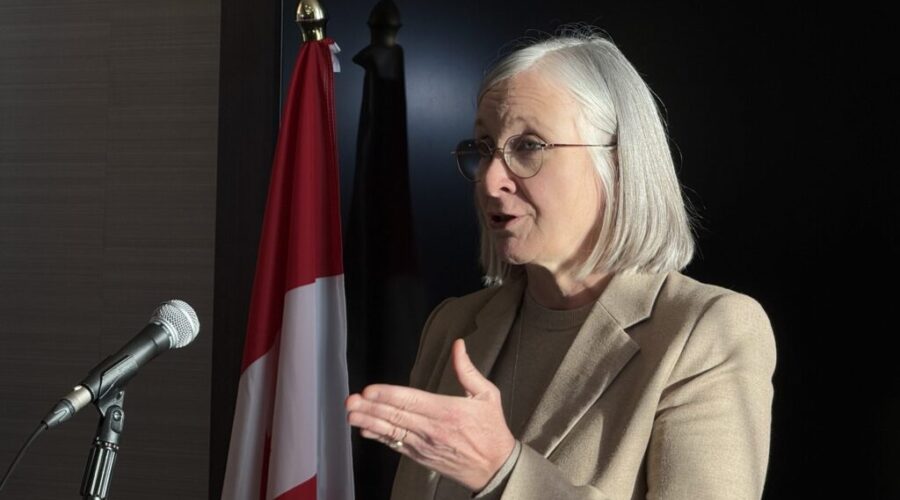
Minister for Jobs and Families Patty Hajdu is particularly concerned about incentivizing a new generation of Canadians into entering the skilled trades.
“Over the last few decades, fewer and fewer people have entered skilled trades training, which means that a lot of the trained people are retiring without the young generation of talent to replace them,” says the minister. “In some cases, the youngest person on a job site can be 30.”
As Canada looks to take on new nation-building projects, build and repair infrastructure, and develop new mining, energy-producing, and other industrial projects, the country will require a healthy stable of young professionals able to make those projects a reality.
“We’ve spent a lot of energy over the last couple of years really thinking about how we can support the work of the provinces and territories to accelerate not only people entering the trades, but getting people through the pipeline,” explains Hajdu.
The most significant arm of the government’s new efforts will be a plan to recruit, train, and hire up to 100,000 new skilled trades workers in the next half-decade.
Incentives will include paid job placements intended to lead into apprenticeships, funding to help businesses take on new apprentices and train them, and grants for apprentices themselves to help them make it through training.
The bonus for those achieving their Red Seal certification is also going up, from $2000 to $5000.
Beyond the skilled trades, the minister also highlights changes that will make it easier for the disabled community to access the Canada Disability Benefit.
She says Canada will “streamline that process for a number of different illnesses,” and recruit new medical practitioners to help certify Canadians with disabilities so they can be eligible for the tax benefits.
Canada is also creating a new sovereign wealth fund, which has some similarities to funds in countries such as Norway.
While Norway’s fund is used to sustain the country’s public services, Canada’s will be used to generate investment into the private sector.
“I’m old enough to remember when there were Canada savings bonds,” Hajdu remarks. “My grandmother purchased me a bond when I was really young, and I got it when I was older in my teen years. The idea is that we will be able to invest in ourselves, and we’ll be able to attract investment.”
Individual Canadians will be able to invest in the fund much in the way they might invest in something like a mutual fund or a GIC (Guaranteed Investment Certificate).
The Canada Strong Fund will operate as a crown corporation, which is independently managed at arms-length from the federal government, though it has to report to parliament.
In being asked about the longevity of the fund, and whether it was at risk of being sold off by a future government, the minister argued that a crown corporation is difficult to dismantle.
She says the job of crown corporations “is to not only grow the fund, but to defend the independence of the particular line of business. I think that’s what will protect the fund… programs can often be fraught with peril when government changes. This will not be the case.”
The spring economic update also highlighted that Canada’s budget deficit turned out lower than expected in 2025 by $11 billion.
“When Prime Minister Carney was elected, one of his commitments was to get Canada’s spending under control. As part of that, all of us as ministers had an obligation to really focus relentlessly on lowering costs and lowering spending in our own departments,” says Hajdu.
The minister points to Canada’s financial position on the world stage as a sign of success.
“The IMF (International Monetary Fund) has noted that we have the strongest fiscal position in the G7, and projects Canada to see the second-fastest growth in 2026 and 2027,” she says. “We have the strongest credit rating in the world. We have the lowest net debt-to-GDP in the G7 by far.”


