


It’s a day to talk about drug overdose, stigma, and what we can do about it, on International Overdose Prevention Day
NorWest Community Health Centre wants to raise awareness about the issue and the resources that are available.
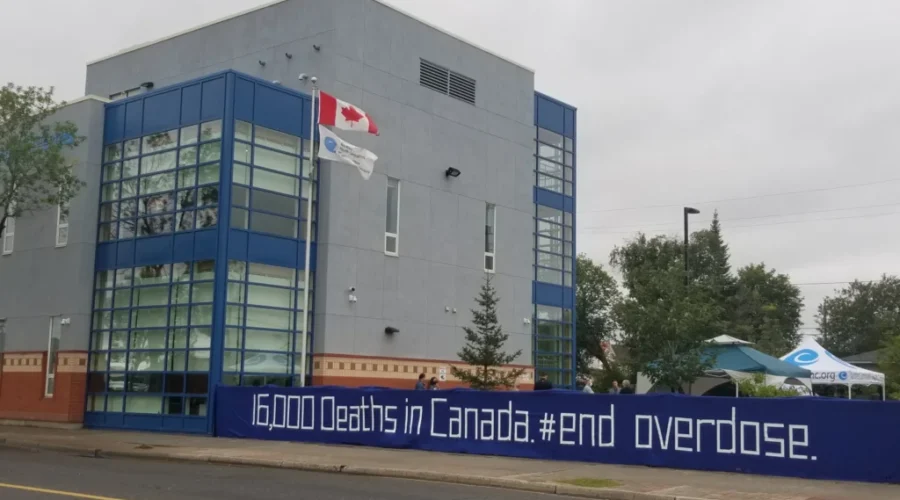
The clinic set up tents outside its building with information and resources about overdose prevention and the services that are available for people who use drugs.
NorWest is also displaying a banner facing Simpson Street that reads “16,000 Deaths in Canada. #end overdose.”
Across Canada, there were 15,393 apparent opioid-related deaths between January 2016 and December 2019.
Brad King is the supervisor of PATH525, the clinic’s safe injection site, and says that includes an estimated 35 people in Thunder Bay.
“Each one of those is a family that will never be the same,” King says.
He adds you should know the signs of overdose and how to save someone with Naloxone.
The safe injection site official says there’s still more to do to stop overdoses, like decriminalizing drugs so people can access a safe supply not contaminated with fentanyl.
“We need to acknowledge the lives that are being lost in this crisis. We need to take the necessary precautions,” King emphasizes. “Our drug supply is poisoned, because it’s in the hands of criminals, who don’t care. Prohibition puts the drug supply in the hands of criminals, and people are being poisoned every day.”
Health Minister Patty Hajdu stopped by the display, and says it’s a serious issue that we need to talk about. She adds it’s important to her because she focused on drug policy for much of her career before entering politics.
“The problem with substance use is that there’s so much stigma involved, and so people who use substances often suffer alone, or their families are afraid to talk about the challenges that they’re facing as a family, and that has to stop,” Hajdu says.
City Hall is also marking the day by lighting its fountains with purple lights, the international colour to commemorate IOAD.
“Our community continues to be impacted by overdoses that are specifically opioid-related,” says Cynthia Olsen, Drug Strategy Coordinator. “In the last five years, we have lost 142 community members due to opioid poisoning, all of whom are someone’s family member or friend.”

