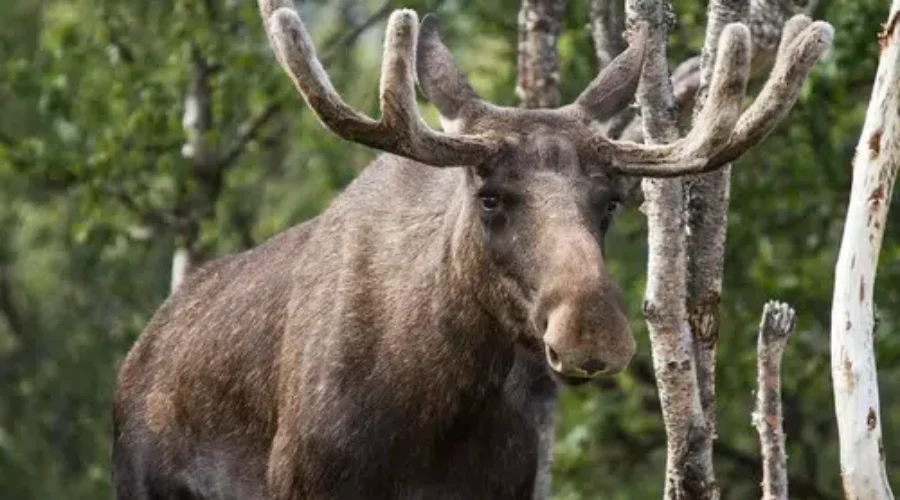
A scary collision this past Friday between an Ontario Provincial Police cruiser and a Moose near Shabaqua. Check out the damage below, OPP North West Region tweeting that the driver sustained minor injuries and to watch out because the moose are very active right now.
A Thunder Bay OPP officer travelling on Highway 17 in the Shabaqua area at 11:25 p.m. met a moose up close and person. The officer sustained minor injuries. Drive carefully out there as the moose are very active right now. ^pt #OPP #RoadSafety #SwampDonkey pic.twitter.com/z2H7bQDUfH
— OPP North West Region (@OPP_NWR) June 3, 2020
Animal-crossing signs are a good heads-up to be careful, but in T-Bay we always need to be on-guard for wildlife on the road. Here are some road safety tips I found on the Ministry of Transportation’s website. Drive safe, my friends!
To reduce your chances of hitting an animal:
- Reduce speed in darkness, rain and fog. These conditions can reduce your ability to see an animal on or near the road.
- Travel at a safe speed and stay alert. Driver inattention and speed are common factors in animal-vehicle crashes.
- Watch for shining eyes at the roadside. If you do see shining eyes, slow down and be ready to stop.
- Keep your windshield clean and headlights properly adjusted.
- Use high beams whenever possible and safe to do so, and scan both sides of the road ahead.
If you see an animal:
- Slow down and sound your horn.
- Be alert for other animals that may be with the one you’ve seen.
- Don’t try to drive around the animal. Animal movements are unpredictable.
- If you wish to watch an animal, find a safe place to pull completely off the road and park first. Do not park on the shoulder of the road, as other drivers may be distracted by the animal and hit your vehicle.
- Stay in your vehicle; getting out increases your chance of being hit by another vehicle.
- If you hit a deer or moose, report it to the local police service or the Ministry of Natural Resources. Do not try to move an injured animal.